MY NESTLÉ INTERNSHIP: FROM "CALL TO ACTION" TO UNDERSTANDING THE REAL INDIA
July 20th, 2026
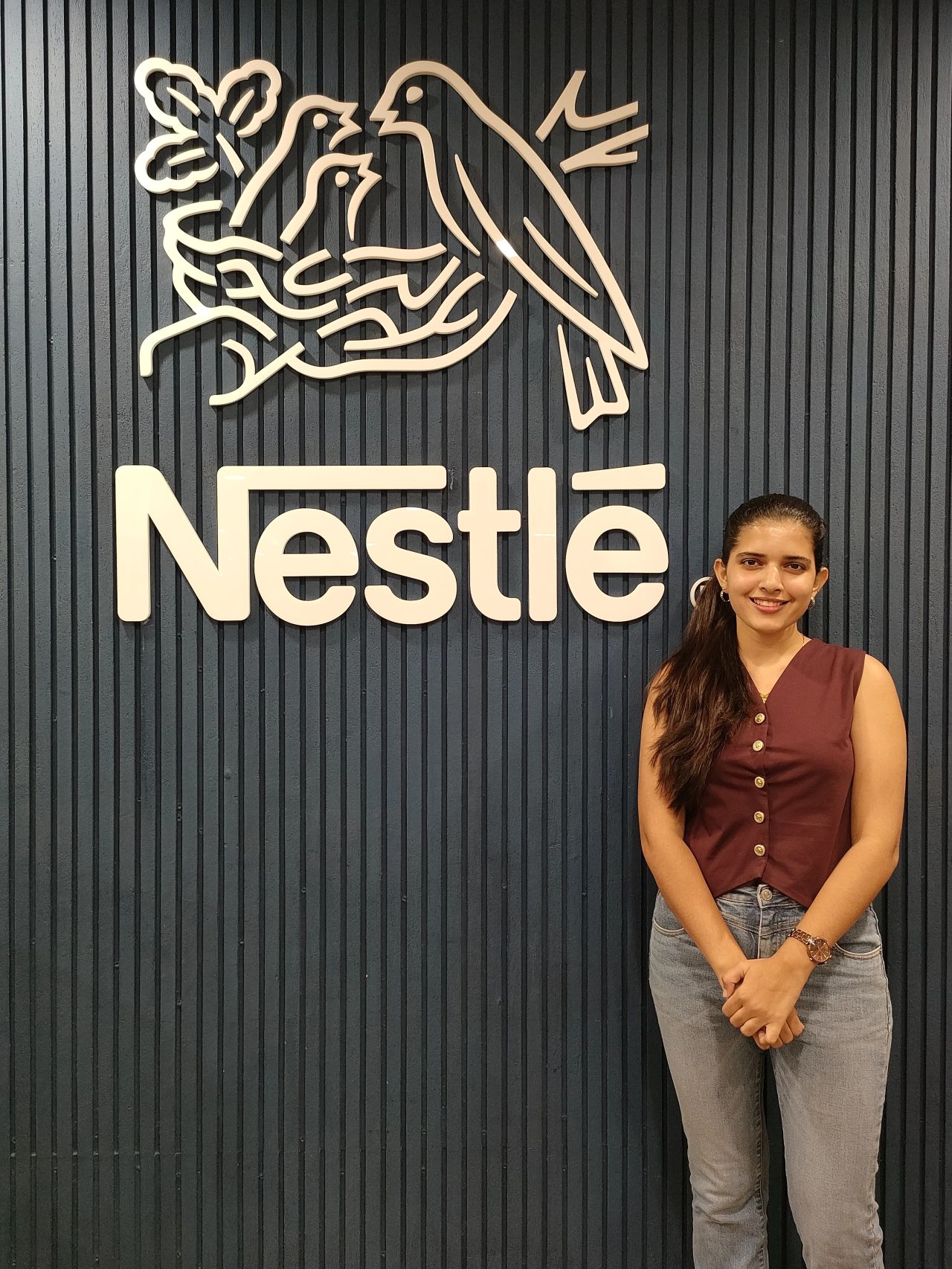
When the commercial head at Nestlé asked me what CTA meant during my interview, I answered confidently: “Call to action: the button that gets people to click on an ad.” It’s what every digital marketer learns on day one. He smiled and told me I’d learn a very different definition over the next two months. He was right. By the end of my internship, CTA had come to mean something rooted in shelves, retailers, and real people walking into real stores, not a button on a screen.
That was my first brush with shopper marketing, a term I’d never even heard before landing at Nestlé.
WEEK ONE: LEARNING TO SPEAK FMCG
My internship began with seven days of market immersion. I tagged along on sales team roll calls and watched an ASM (Area Sales Manager) manage his team, warehouses, returns, and something called “bad goods.” I learned what CD and DC points were, what a DOR (Daily Operational Review) is, and what a “program outlet” means on the ground. I was scribbling down acronyms in my notebook like I was cramming for an exam. Honestly, by day three I was a little overwhelmed. By day seven, I could actually follow what people were saying. I could finally follow a sales conversation without asking what half the acronyms meant.
PROJECT 1: SHOPPER MARKETING
It was peak Delhi summer, my first time in the city, and definitely a baptism by heat, when my first big project took me into four rural towns in Haryana. I spoke with 20 retailers and dozens of shoppers to understand how rural buying behaviour differs from urban: what drives brand switching, how promotions land, how much retailers themselves influence a purchase, and how POSM (point-of-sale material) actually changes what people pick up. I ended up analysing shopper switching, promotions, and retailer influence across three categories to help shape trade strategy, and realised how much I still had to learn about “the Indian consumer.”
PROJECT 2: URBAN CTA
The second project, “Urban CTA,” moved me into cities, and the approach flipped completely. We ran a test-vs-control experiment across two cities- Mumbai and Delhi, A/B testing shelf-strip copy and running a competitive share analysis to guide how POSM should roll out. Watching the same brand strategy play out so differently between a Haryana kirana store and an urban outlet was genuinely eye-opening, it’s one thing to read about India’s diversity in a case study, another to see it across two store visits in the same week.
BRINGING IT ALL TOGETHER
Once all four regions had wrapped their fieldwork, it was time to make sense of it, 11,500+ shopper data points, to be exact. I’d never touched Power BI before this, so I used the Coursera access BITSoM gives us and basically taught myself over a weekend. Built dashboards in Power BI and Excel for the leadership reviews and then presented the strategy to ASMs across all four regions to help them shape their GTM plans.
FINAL NOTE
What actually helped me get through it were Coursera (Provided by BITSoM) that got me dashboard-ready in record time, GCI sessions which taught me how to present to a room full of ASMs without freezing up, and consumer behaviour and marketing classes that quietly shaped almost every call I made in the field, even when I didn’t realise it in the moment.
My advice to future interns would be to ask questions, even the dumb ones, since nobody expects you to know what a DOR is on day one. Be curious, talk to as many people as you can, retailers included; they know more than any report will tell you, and lastly, don’t just stick to your JD. Some of the best things I got to do were things nobody technically assigned me.
You will now receive an email to verify your Email ID.
Once email ID is verified, you will receive another email with your Login ID and to set your password for Student Dashboard to start your application.
Within next 3 business days, our admissions counsellor will call you from a Truecaller verified number.
In case of any urgent queries, you can call +91 8050012004 or write to us at admissions@bitsom.edu.in
Thank You for Registering!
You will now receive an email to verify your Email ID.
Once email ID is verified, you will receive another email with your Login ID and to set your password for Student Dashboard to start your application.
Within next 3 business days, our admissions counsellor will call you from a Truecaller verified number.
In case of any urgent queries, you can call +91 8050012004 or write to us at admissions@bitsom.edu.in
Download Brochure
Thank you for registering with the BITS School of Management.
Our admission cycle is closed now for A.Y. 2024-2025. We are not accepting any new applications for now.
Our counselors will reach out to you if there are any further updates about your application.
In case of any urgent queries, you can call +91 8050012004 or write to us at admissions@bitsom.edu.in
Request Callback
Thank you for registering with the BITS School of Management.
Our admission cycle is closed now for A.Y. 2024-2025. We are not accepting any new applications for now.
Our counselors will reach out to you if there are any further updates about your application.
In case of any urgent queries, you can call +91 8050012004 or write to us at admissions@bitsom.edu.in